
Swimming Pool Leak Detection on the South Shore and in Greater Montreal
Swimming pool leak detection: a problem not to overlook
A pool leak is never just a simple drop in water level. When not addressed promptly, it can lead to significant water loss, damage certain components of the filtration system, weaken the pool structure, and unnecessarily increase maintenance costs. At Piscine Man, we offer a specialized service in swimming pool leak detection on the South Shore and in Greater Montreal to accurately locate the source of the problem and recommend the most appropriate repair based on the situation. Whether the leak comes from the structure, an accessory, a skimmer, a light, the plumbing, or a connection, a methodical inspection helps avoid unnecessary work and quickly identify the right solution.
How to recognize the signs of a pool leak?
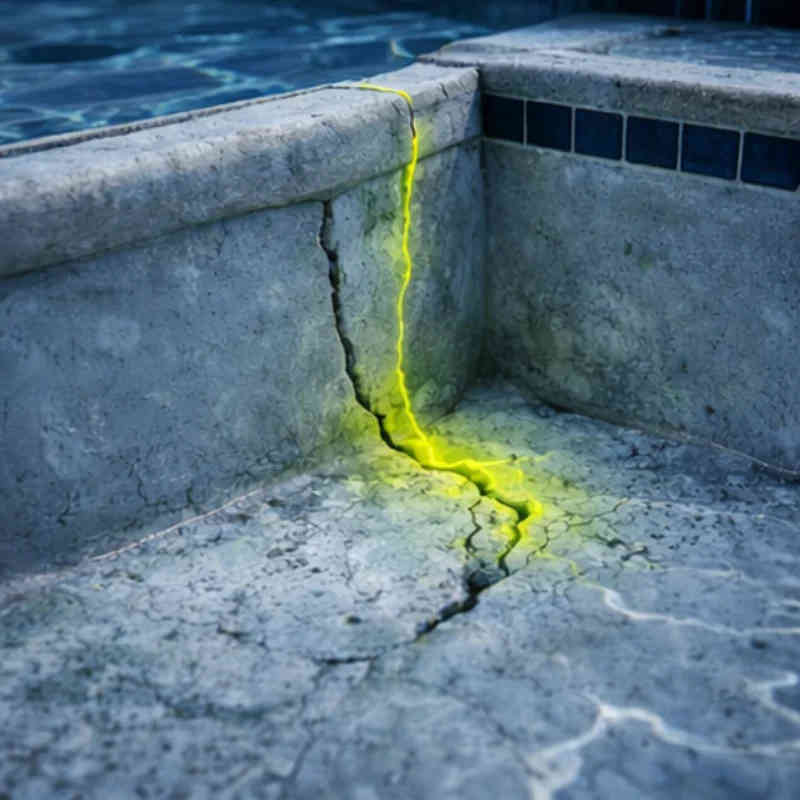
Several homeowners notice they need to add water more frequently than usual. An abnormal drop in water level is often the first sign of a problem, especially when the loss becomes consistent. In other cases, a leak may also appear as wet areas around the pool, air bubbles in the filtration system, visible cracks in the concrete or plaster, or even a skimmer or drain that appears damaged.
Difference between normal evaporation
and a pool leak
Before proceeding with swimming pool leak detection, it is essential to distinguish normal water loss caused by evaporation from an actual leak. A pool can naturally lose water depending on temperature, wind, and day-to-night variations. However, some simple tests can quickly help assess the situation.
1. Bucket test (placed on the pool steps)
The bucket test is a simple and effective method to determine whether water loss is due to evaporation or a leak.
- Fill a bucket with water
- Place it on the pool steps
- Make sure the water level inside the bucket matches the pool’s water level
After 24 hours, compare the levels:
- If the water level in the bucket and the pool have dropped equally, it is normal evaporation
- If the pool’s water level is lower than the bucket’s, a leak is present, either in the pool or in the filtration system
2. Test to locate the leak: pool structure or filtration system
Once a leak is confirmed, it is important to determine whether it originates from the pool structure (concrete or vinyl liner) or from the filtration system.
Here is the recommended method:
- Bring the water to its normal level and make an initial mark (tape or permanent marker)
- Let the pool run normally for 24 hours
- Note the new water level
- Refill the pool to the original level (first mark)
- Completely shut off the filtration system for 24 hours
- Make sure both tests are conducted over the same duration
For greater accuracy, you can also plug the return lines and the skimmer.
Interpretation of results:
If the water loss is the same in both tests, the leak is in the pool (concrete structure or liner)
If the loss is greater when the filtration system is running, the leak is in the plumbing or filtration system
These checks help better guide the investigation during a professional inspection. By identifying from the start whether the leak comes from the pool or the filtration system, it is possible to reduce diagnostic time and avoid unnecessary costs.
The most common areas where a pool can leak
During swimming pool leak detection, certain areas are more likely to be involved. A targeted inspection helps save time and locate the problem more quickly.
The most frequently affected points are:
- Return line connections
- Skimmer connections
- Underground piping and plumbing
- Backwash discharge line of the filtration system
- Cracks in the concrete or punctures in the vinyl liner
- Around lights and other accessories
- Main drain
- Areas behind tile
These locations often require a thorough inspection during a professional service call.
Methods used for swimming pool leak detection
Effective leak detection relies on a combination of techniques to accurately identify the source of the leak. These approaches help avoid unnecessary investigation and quickly pinpoint the problem.
The main methods used are:
- Visual inspection of components and structure
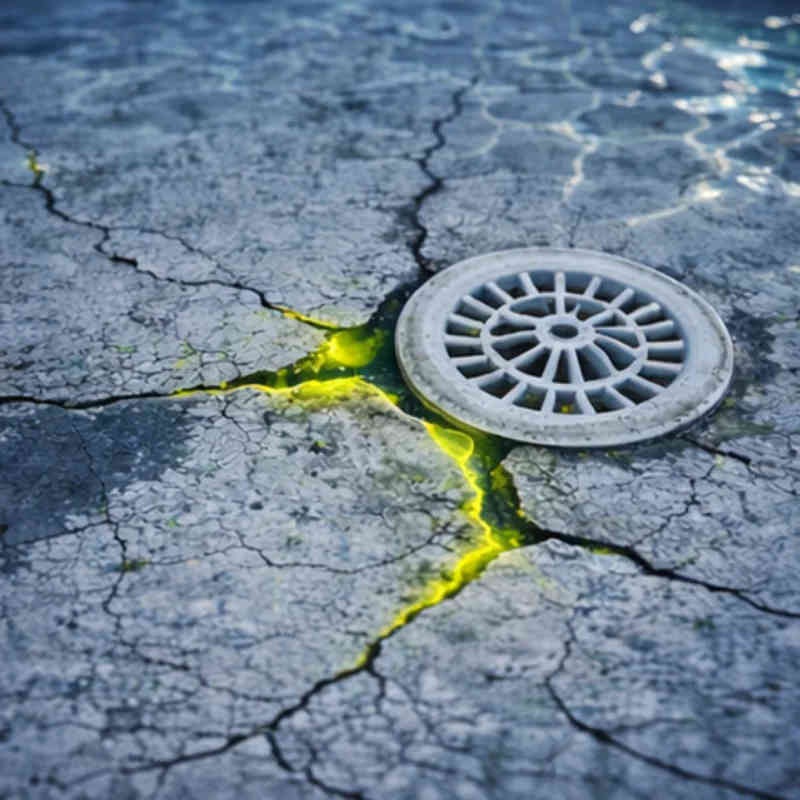
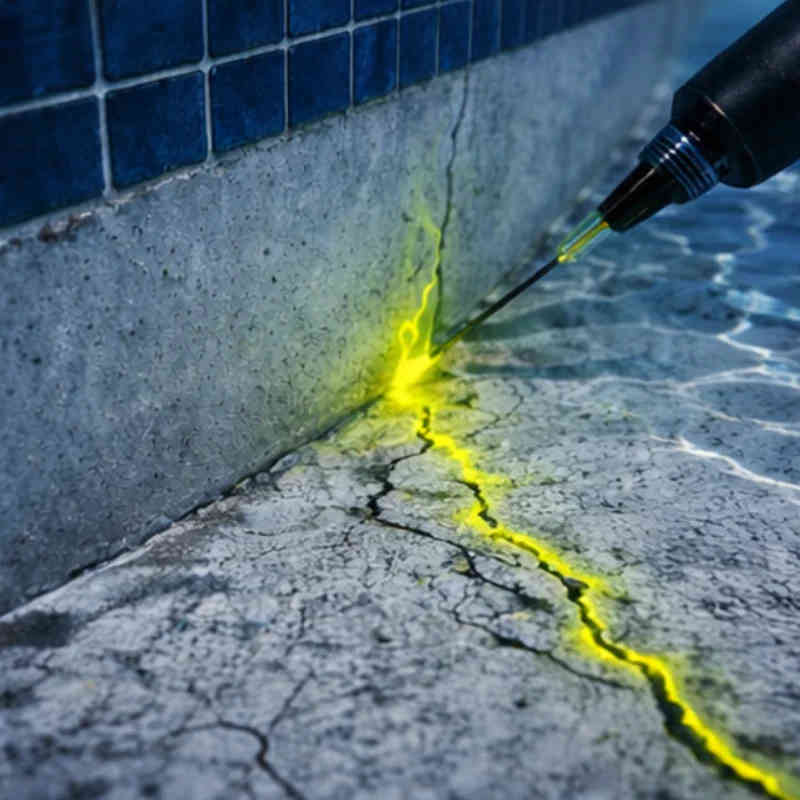
- Dye testing to detect water infiltration
- Pressure testing of plumbing lines
- Inspection of seals, fittings, and equipment
- Detection in underground plumbing
- Acoustic leak detection when necessary
Why repair a pool leak quickly?
An untreated leak can lead to significant consequences, both for the pool and its surroundings. Prompt action helps limit damage and avoid more costly repairs.
Among the main risks:
- Damage to the filtration system, especially the pump
- Partial or complete draining of the pool
- Soil erosion around the pool
- Water infiltration that may affect nearby structures
- Impact on vegetation (lawn, trees, hedges) due to chemicals
- Financial loss related to water, salt, and maintenance products
Possible repairs after pool leak detection
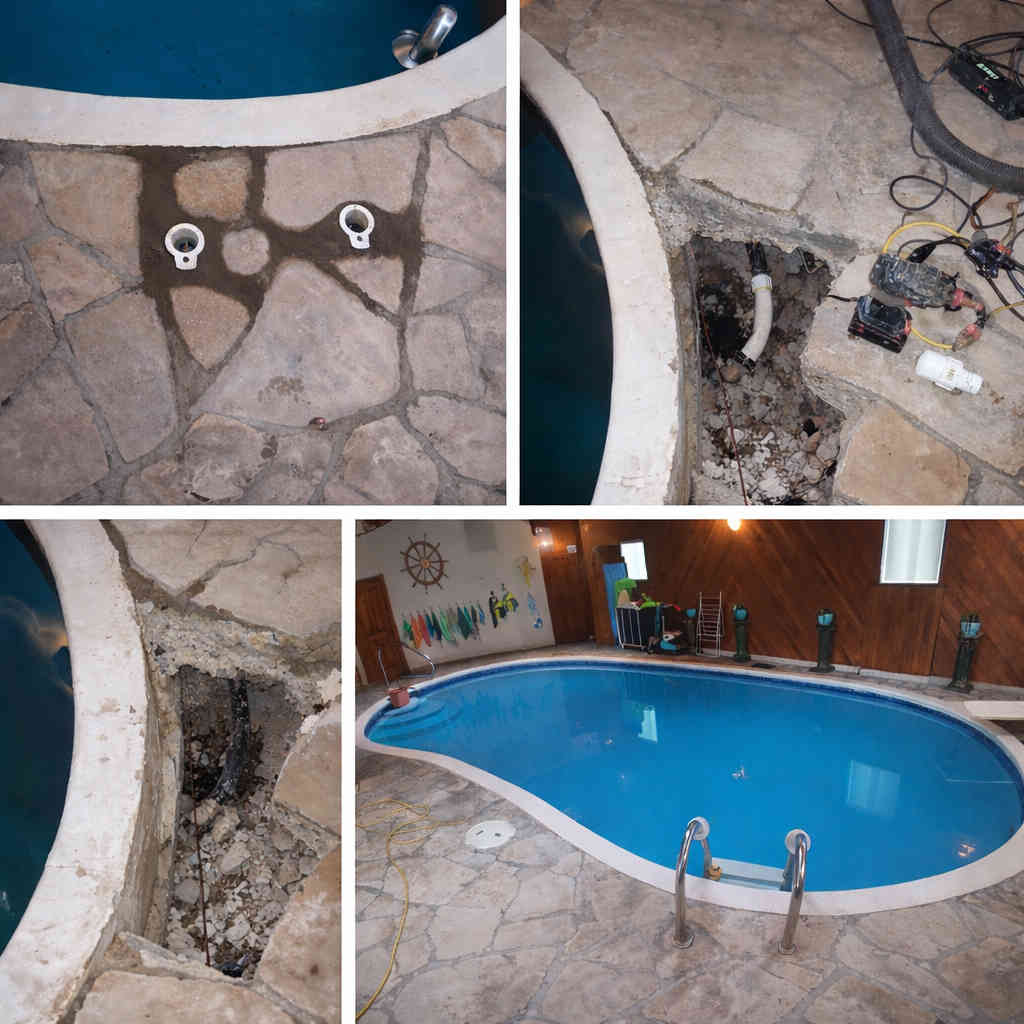
Once the leak has been located, different solutions can be considered depending on the type of problem. In most cases, pool components can be repaired or replaced without having to redo the entire installation.
The most common repairs include:
- Skimmer repair or replacement
- Sealing cracks in concrete
- Pool plumbing repair
- Fixing defective seals or fittings
- Replastering or repairing sections of the structure
- Replacement of accessories
At Piscine Man, we don’t just locate leaks, we provide long-lasting solutions to protect your investment. Whether it’s a targeted repair, a concrete pool renovation, or in-ground pool maintenance, our team supports you every step of the way. Need a diagnosis or assistance? Contact us today.
FAQ – Swimming pool leak detection
How to know if your pool is leaking?
An abnormal drop in water level is usually the first sign. If you need to add water frequently or if the loss seems greater than usual, it is recommended to perform simple tests such as the bucket test or compare water loss with and without the filtration system running. These checks help quickly confirm the presence of a leak.
How much water can a pool lose to evaporation?
Water loss due to evaporation can vary significantly. It may be almost negligible under certain conditions, but it can also reach several millimeters or even a few inches per night.
How much does pool leak detection cost?
The cost depends on several factors, including the complexity of the leak, its location, and the type of pool. However, professional leak detection allows the issue to be identified quickly, reducing diagnostic time and avoiding unnecessary costs.
This variation depends mainly on:
- Pool water temperature
- Sun exposure and wind
- The temperature difference between day and night
The warmer the water and the cooler the nights, the greater the evaporation can be. This is why it is essential to clearly distinguish normal water loss from an actual leak.
Can a crack in a concrete pool be repaired?
Yes, in most cases, a crack in a concrete pool can be repaired. The method used will depend on the extent of the crack and its cause, but solutions are available to restore watertightness and ensure the durability of the structure.